
German Potato Finger Noodles | Schupnudeln
Schupfnudeln are traditional German finger potatoes that seem humble, but are unforgettable when made properly and are endlessly versatile.
I’ve made Schupfnudeln many times over the years, and getting them truly authentic always comes down to a few key techniques and tips that I am sharing below.

My recipe shows you the classic German method so you end up with tender, flavorful potato noodles – not dense or floury imitations. They are perfect on their own, served with traditional sauerkraut or sweet with cinnamon-sugar.
This post contains affiliate links, which means I make a small commission when you buy something, but at no extra cost to you. You can read my full disclosure for more details.
What are Schupfnudeln?
Schupfnudeln are traditional German potato noodles, similar to gnocchi but longer, more rustic, and made with mostly potatoes.
Unlike gnocchi, they use very little flour, which gives them their distinct flavor and texture.
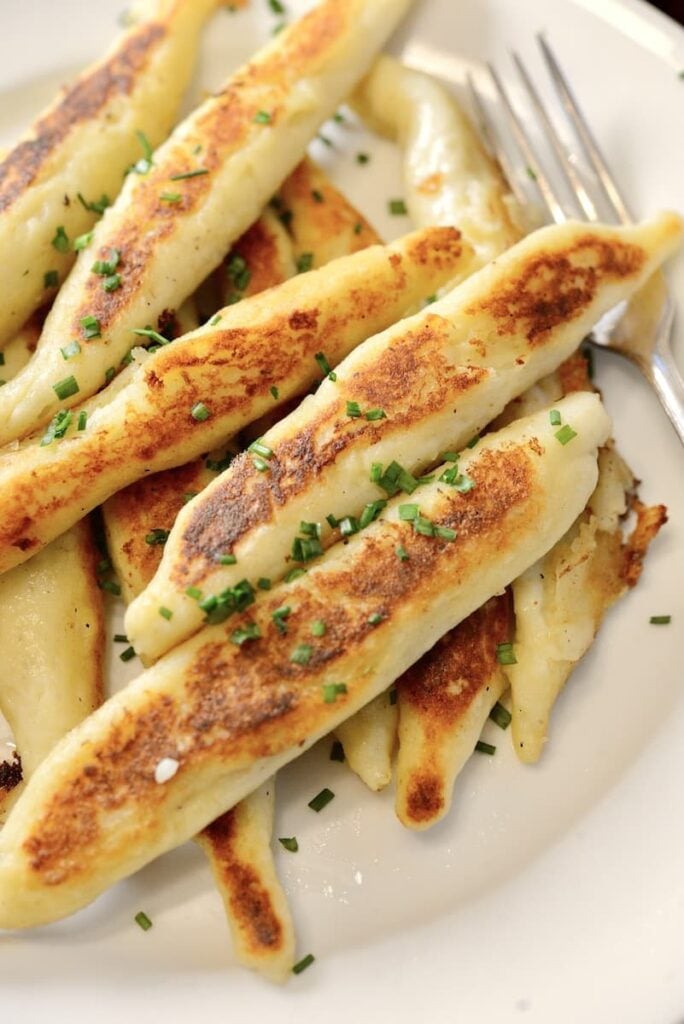
Their hand-rolled, tapered shape is traditional and helps them brown beautifully when pan-fried, making them simple, comforting, and unmistakably German.
Why you’ll love this recipe
Ingredients
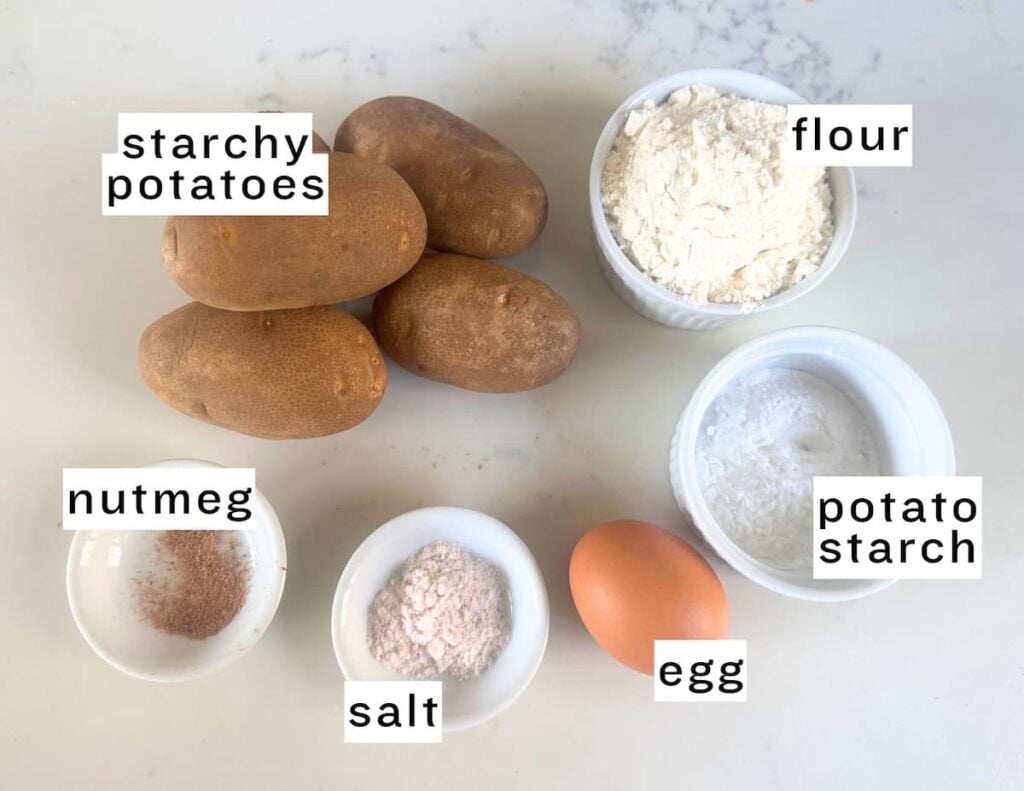
- Russet potatoes: very starchy potatoes are essential for the correct texture
- All-purpose flour: start with less than you think you need
- Potato starch: helps bind without making the dough heavy (cornstarch works, too)
- Salt: seasons the dough without overpowering the potato flavor
- Freshly grated nutmeg: classic and essential
- Egg: binds everything together
Simple substitutions
- Potato starch: cornstarch works just fine
- Nutmeg: don’t skip if possible, but reduce slightly if very fresh
- Russet potatoes: do not substitute with waxy potatoes — texture will suffer
How to make Schupfnudeln
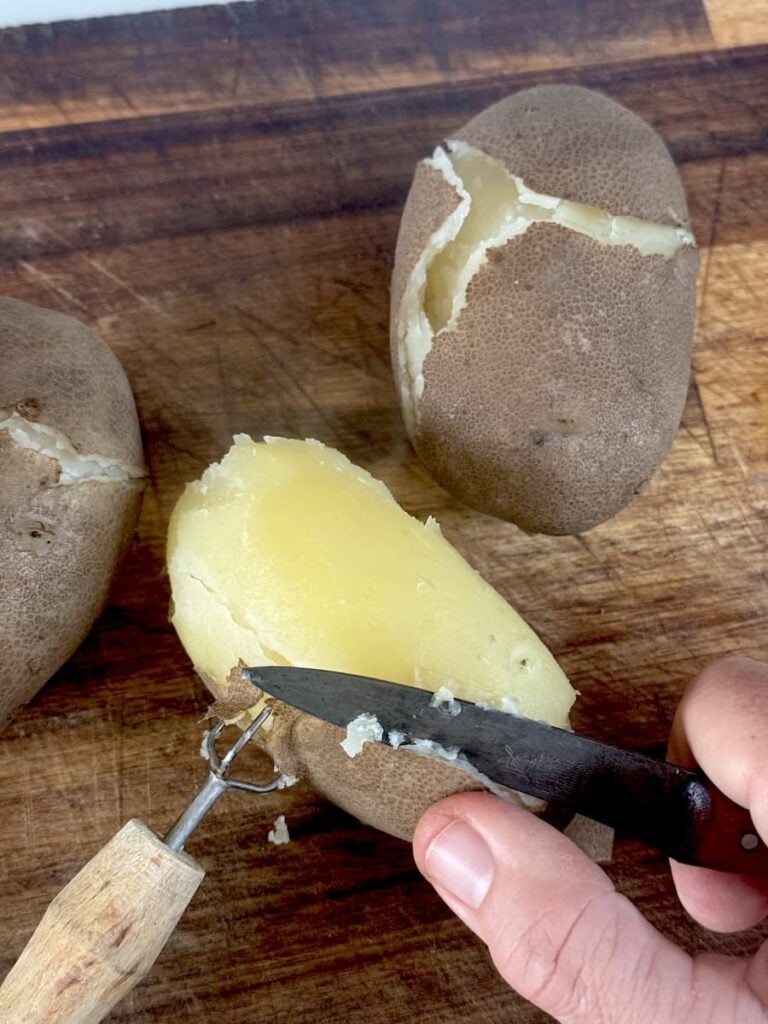
- Cook the potatoes and peel them while still warm.
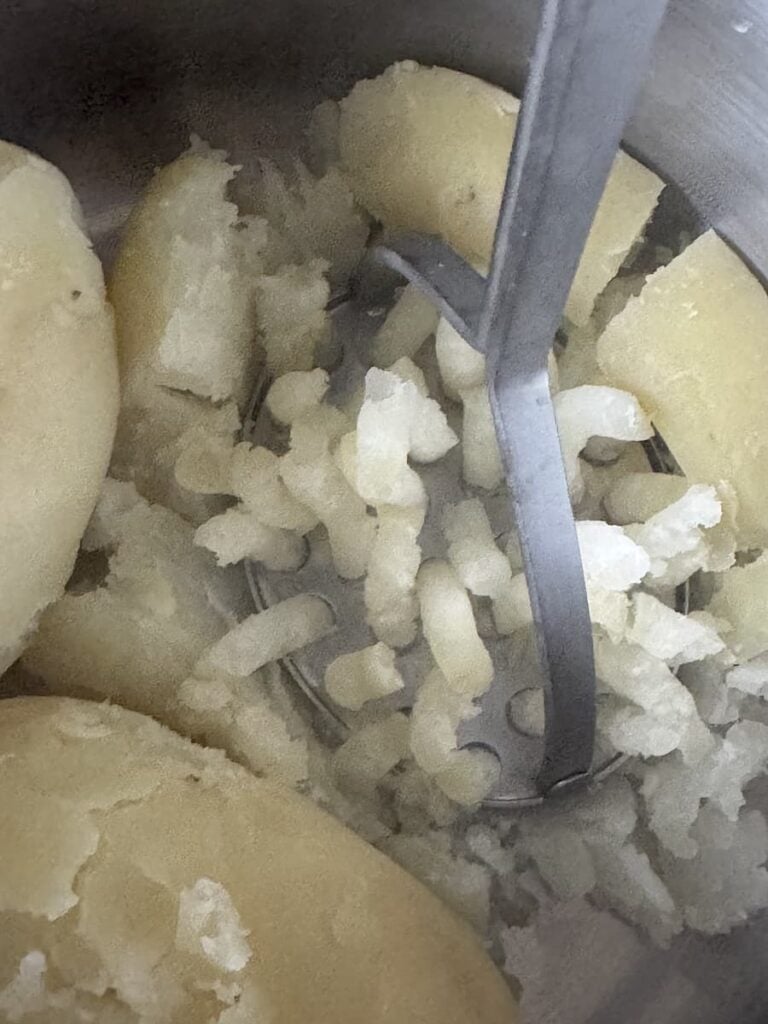
- Mash the potatoes while still warm. Let them cool down.

- Mix well with the remaining ingredients
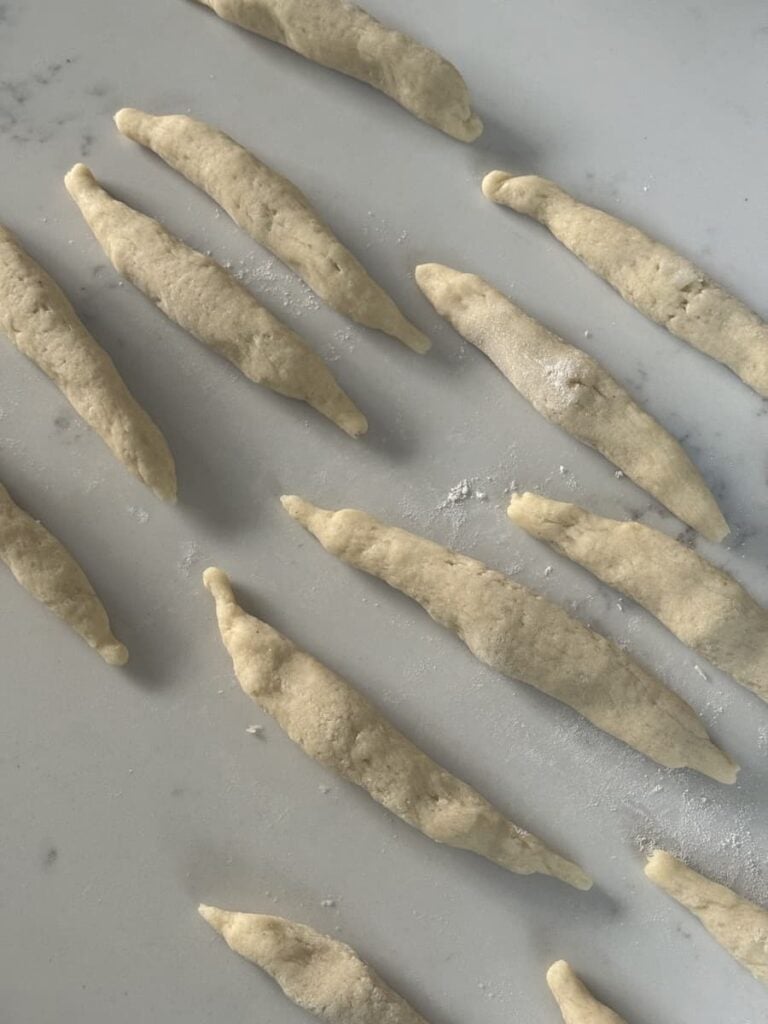
- Form them into logs with pointy tips.
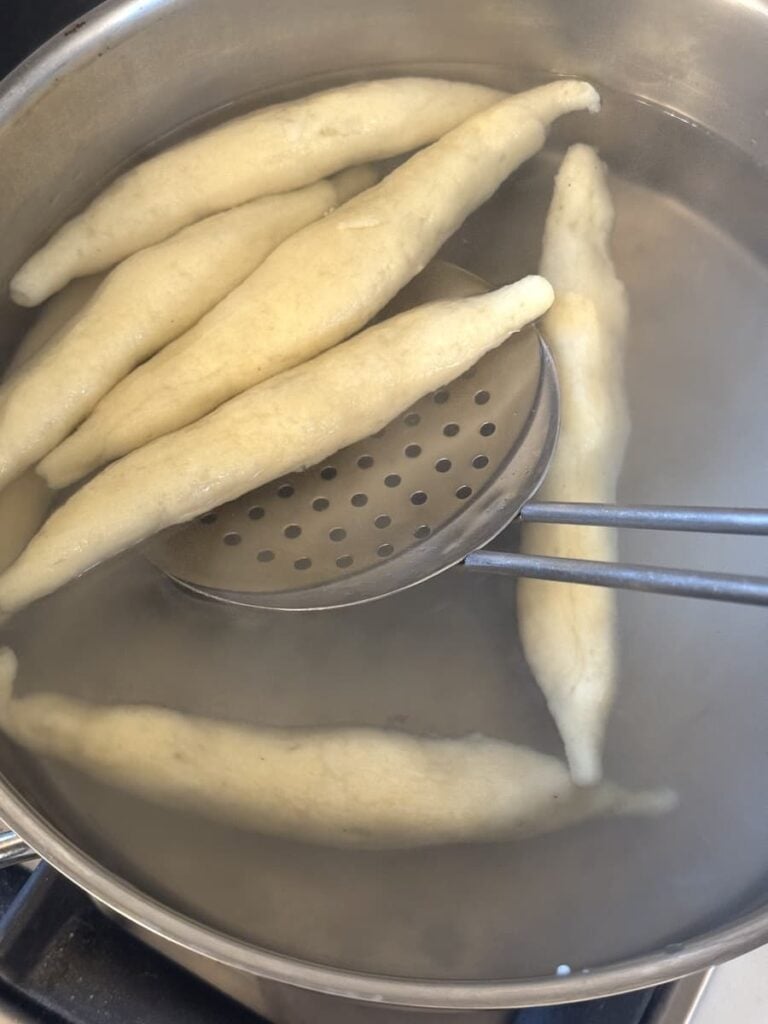
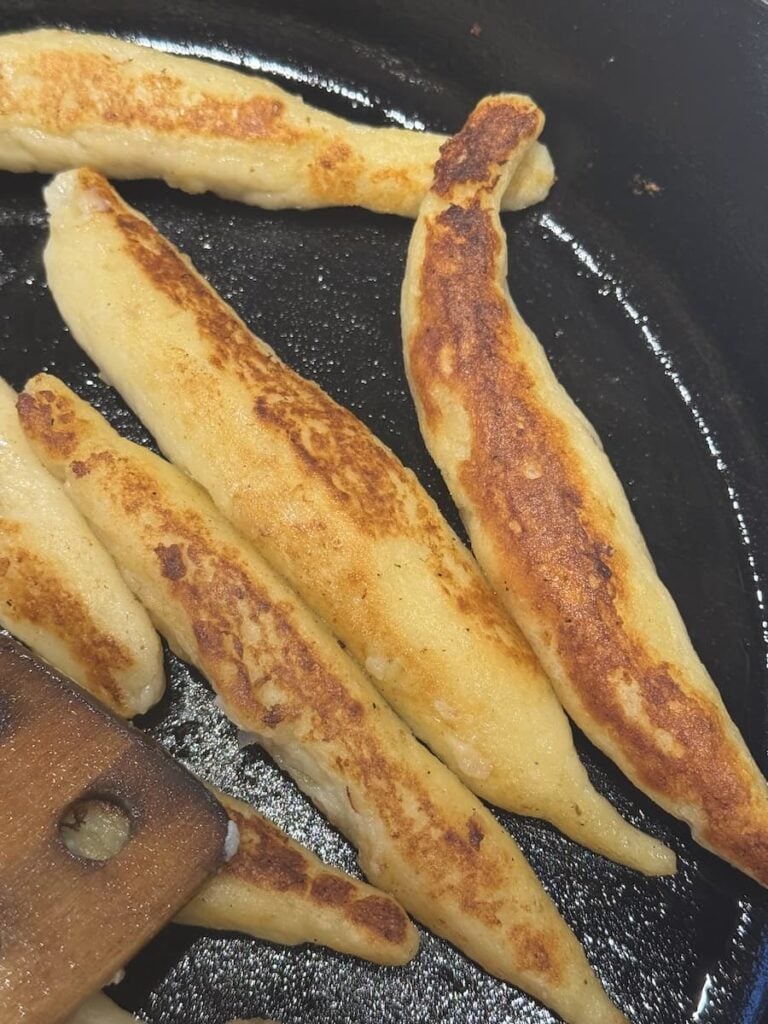
- Cook the Schupfnudeln.
- Optional: Fry them in plenty of browned butter.

Anja’s recipe tips
- Letting the potatoes cool fully prevents floury Schupfnudeln
- Use minimal flour – too much makes the potato noodles taste like flour
- Keep the water just below boiling so the noodles don’t fall apart (learn more about how to correctly boil potatoes)
- Rustic shapes are traditional – perfection is not necessary
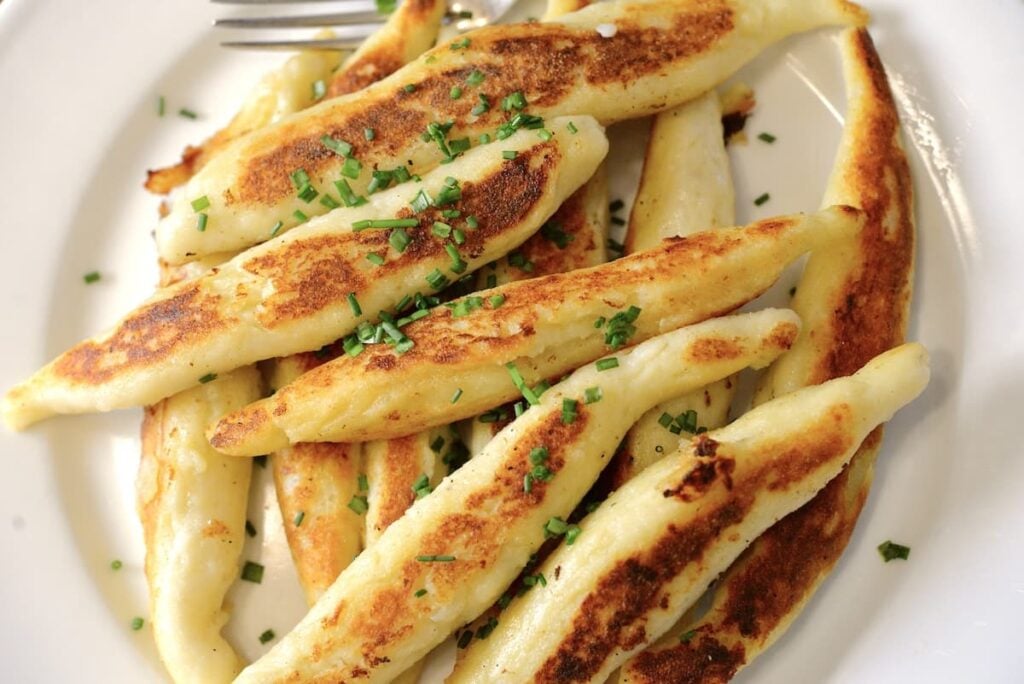
Serving suggestions
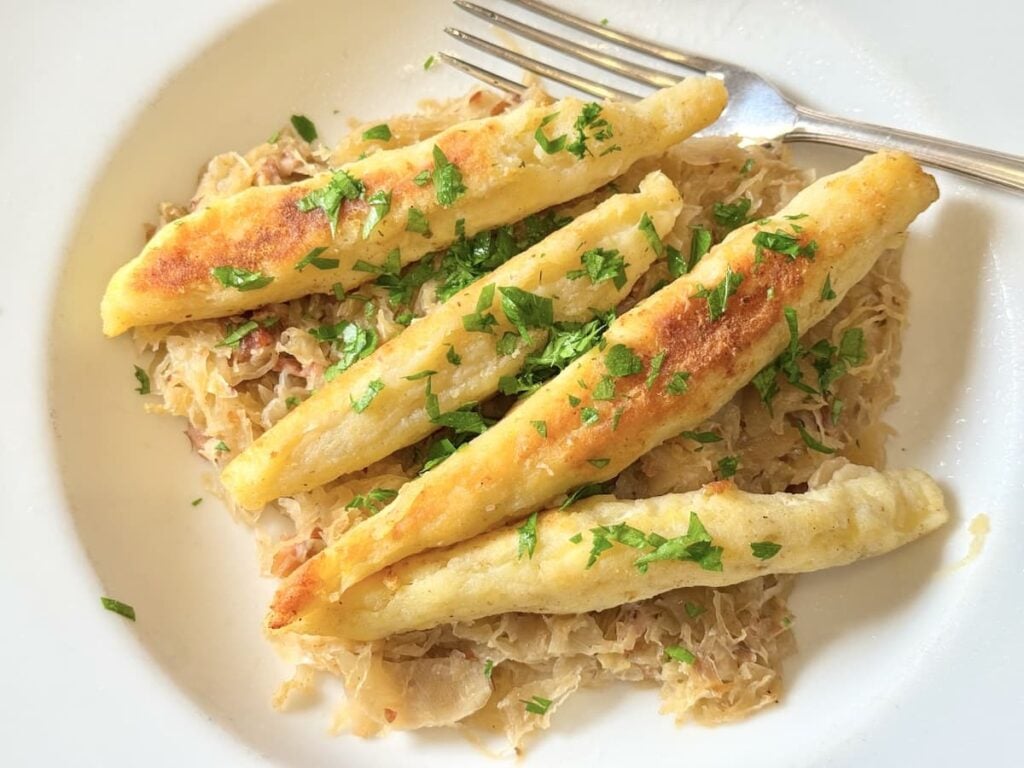
Traditionally, Schupfnudeln are served savory with sauerkraut.
You can also serve them:
- Tossed in butter, sugar, and cinnamon
- With plum jam for a sweet variation
- Alongside roasted meats or sausages
👉 If you want the classic restaurant-style version, serve these with my braised German sauerkraut with bacon and onion (you will love how mild and balanced it is, and not sour at all).
Storing and freezing instructions
Reheat: pan-fry straight from frozen for the best texture
Refrigerate: store cooked Schupfnudeln for up to 3 days
Freeze: freeze after boiling but before pan-frying

Ingredients
- 2 pounds starchy potatoes such as Russets
- 4 oz AP flour
- 1 egg
- 1 TBSP potato starch or corn starch
- 1 tsp salt
- freshly grated nutmeg optional
Instructions
- Boil the potatoes until soft inside. Drain the cooking water. Peel the potatoes as soon as they are cool enough to touch. Let them cool down.
- In a medium bowl, mash the potatoes. Add the remaining ingredients and mix them well. You can also use your hands.
- On a lightly floured surface, roll the potato mixture into a long roll. Cut into smaller pieces. Shape each piece into a small log with pointy ends.
- In a large pot, bring water just to boil. Add the Schupfnudeln and cook until they float to the surface.
- With a slotted spoon, remove the Schupfnudeln from the cooking water.
- Optional: fry them in melted butter until golden brown.
Notes
- You can make one test noodle to make sure they hold up. If they don’t, add just a tad more flour
- Make sure to simmer the Schupfnudeln instead of cooking them at a full boil to prevent them from falling apart
- Frying the noodles in melted butter is optional but highly recommended!
Nutrition

FAQs about Schupfnudeln
More German recipes you might enjoy:
When you say the frying is optional, does that mean you can fry them rather than simmering them in water or does it mean you can fry them after they have been simmering in water?
Yes, you can simply cook them in water and eat as is. I love the frying after boiling as it gives them a crispier outside and deeper flavor with the browning ~ Anja
are you able to tell what specific brand of potato starch you use? I was considering manischewitz brand as I like their matza ball mix and soup. thanks
I use Anthony’s Potato Starch for this recipe and have had great results with it.
Most plain potato starch brands will work just fine, though. The key is that it’s pure potato starch with no added ingredients. If the Manischewitz one is just potato starch, it should work the same way ~ Anja