
Homemade German Stone Ground Mustard
This post contains affiliate links, which means I make a small commission at no extra cost to you. You can read my full disclosure.
If you have never made your own stone ground mustard, you will be in for a real treat with this authentic German mustard recipe!

This post, originally published June 3, 2024, was updated with additional helpful tips on February 26, 2025.
I used to purchase mustard in the store but ever since I started making it at home, I am a believer.
Not only do you get a lot more depth of flavor, but you can also control the ingredients and the ratios. Being German, I am very partial to German mustard which is a bit different from its American or French siblings. Once you have mastered this basic recipe, you can experiment and come up with your mustard recipes.
Whether you are looking to upgrade your summer barbecues, create healthier versions of store-bought classics, or just want to make a true German-style mustard, you will want to keep this recipe in your back pocket!
Why You Will Love This Recipe
- It is very simple and easy to make
- The taste and flavor is so much better than store-bought
- It makes a great present
- It is fun to experiment with various additions and flavors
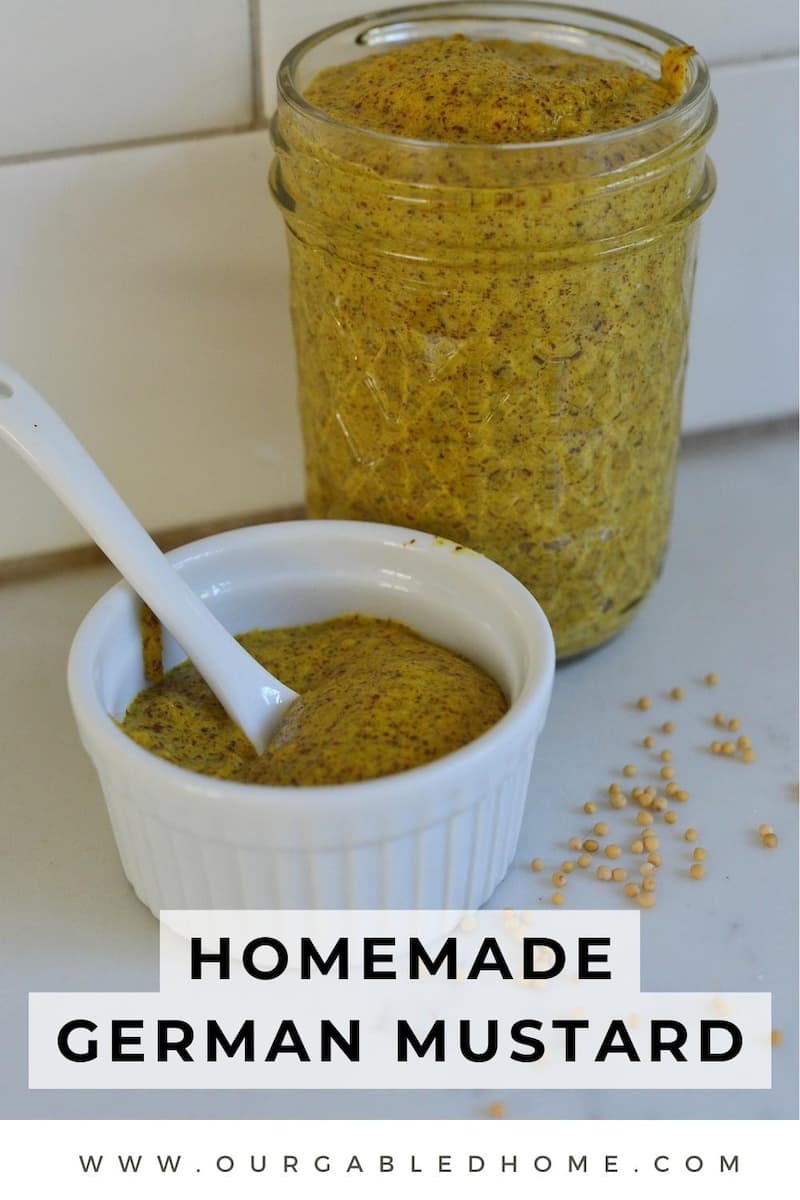
Key Ingredients
You only need a few ingredients for your homemade mustard:
- Mustard seeds: I like a 50/50 mix of brown mustard seeds and yellow mustard seeds. You can find them in better grocery stores or online
- Vinegar: I prefer a good white wine vinegar
- Water: I am just listing this since it is an official ingredient
- Sugar: I use regular cane sugar
- Salt: I like using high-quality sea salt but kosher salt is great, too
- Turmeric: While not strictly necessary, adding this spice gives your mustard a nicer yellow color.

Helpful Kitchen Tools for Making Mustard
Depending on the texture you are going for, you may benefit from using these kitchen tools:
- Kitchen scale: I highly recommend you use an inexpensive kitchen scale for this recipe
- Spice grinder: I prefer grinding whole seeds instead of using store-bought mustard powder. A spice grinder or coffee grinder works well, or you could even use a mortar and pestle.
- Small food processor: While you could just stir the mustard by hand, this kitchen staple makes it a lot easier.
- Pretty jar: This recipe makes a little more than 8 ounces of mustard and why not present it in a very pretty jar?
Substitutions and Variations
Here are some ideas on how to adjust or customize the recipe:
- Mustard seeds: Brown mustard seeds are spicier than the yellow ones. Black mustard seeds have the most zing. You can change the ratio depending on how spicy or mellow you’d like the final mustard to be. If you can’t find whole mustard seeds, you can also use mustard powder.
- Vinegar: I haven’t tried it but you could also use apple cider vinegar or a spirit vinegar.
- Sugar: Regular cane sugar is the classic but you can use brown sugar for a deeper flavor and darker color. Also, you can add more if you’d like your mustard to be sweeter. Honey or maple syrup are also great additions to homemade mustard.
- Spices: If you don’t have any turmeric, you can omit it. Or use more. You can also use other spices such as tarragon, paprika (either Hungarian or smoked), garlic powder, or whatever you feel like adding.
- Consistency: I like the look of grainy, homemade German mustard. Alternatively, you can pour the warm vinegar water over the whole seeds and let them soak for 24 hours. Then you add the remaining ingredients and use a food processor or immersion blender to blend it into a smooth paste.
Great Uses for Authentic German Mustard
Once you have experienced how great homemade stone ground mustard tastes, you’ll want to add it to a lot of dishes and recipes.
The classic way to serve this condiment is on grilled meats, hot dogs, Leberkäse rolls, and sausages (think German bratwurst or Currywurst). There are a lot of recipes that use a bit of mustard, such as homemade salad dressings, mayonnaise, German beef rouladen, eggs in mustard sauce, and many more.

How to Make Stone Ground Mustard
Here are the basic steps. See the recipe card at the bottom of this post for full instructions.
- Boil the vinegar. After the vinegar comes to a boil, remove it from the heat and transfer it to a heat-proof bowl. Add cold water, then let the mixture cool down.
- Grind the mustard seeds. You can do this while the vinegar solution is cooling down. You’ll need to grind the seeds into a fine powder.
- Combine the mustard seed powder with sugar and spices.
- Blend the vinegar/water solution and mustard powder. I use a small food processor to blend the mustard. If you don’t have one, you can use a small blender or stick blender.
- Taste the German mustard and adjust seasonings as needed. It may need a bit of additional vinegar or sweetener. If it is too thick, just add some water to thin it out.
- Transfer the mustard into clean, dry jars and close with a lid.

Helpful Recipe Tips
- Be sure to use warm or room-temperature water, as hot water will make your mustard bitter.
- Let the German mustard mellow down for at least 3 days. Before then, it will still be pretty pungent. After 2 weeks, it will have developed its full aroma and flavor.
- Use a coffee or spice grinder to easily grind the mustard seeds. You can use a paper towel with some white vinegar to clean the coffee or spice grinder both before and after grinding the seeds.
- This recipe yields 8 ounces (16 tablespoons) of stone ground mustard. If you’d like to make a double or even triple batch, you can safely freeze it for up to a year!
Storing and Shelf Life of Homemade Mustard
Since mustard seeds are naturally anti-bacterial, this German mustard will last for a long time. I recommend keeping it in the refrigerator in an airtight container, where it should last at least 3 months.
For longer storage, freeze the mustard for up to 12 months. Place the stone ground mustard into an airtight, freezer-safe container so that it doesn’t get freezer burn.
Other Easy Condiment Recipes
Once you start making your own condiments, you’ll never want store-bought again!
Let me know if you have any questions or comments!

Homemade German Stone Ground Mustard
Ingredients
- 100 g yellow mustard seeds
- 100 g brown mustard seeds
- 275 ml white wine vinegar
- 100 ml water
- 80 g sugar
- 3 tsp salt
Instructions
- In a medium saucepan and over low heat, bring the vinegar to a boil. Transfer it to another bowl, add the water, and let it cool down to almost room temperature.
- In the meantime, grind the mustard seeds into a fine powder. In a medium bowl, combine mustard seed powder with the sugar, salt, and turmeric.
- Once the vinegar water has cooled down enough, add it to a small food processor with the mustard mixture. Blend it for about 5 minutes into a smooth paste. You can try to adjust the taste: you may like to add a bit of additional vinegar, sweetener, or just water if it’s too thick.
- Fill the mustard into clean, dry jars and close with a lid.
Notes
- This recipe yields 8 ounces (16 tablespoons) of stone ground mustard.
- Be sure to use warm or room-temperature water as hot water will make your mustard bitter.
- Let the mustard mellow down for at least 3 days. Before then it will still be pretty pungent. After 2 weeks it will have developed its full aroma and flavor.
- You can use a paper towel with some white vinegar to clean the coffee or spice grinder both before and after grinding the mustard seeds.
Video

I’m wondering how much mustard powder to use (if whole mustard is unavailable).
I have not tried that but I would start with the same amount in weight ~ Anja
I think it means that after you ground the mustard seeds, it turns into powder.
That is right ~ Anja
Yellow mustard powder will not achieve the taste of brown mustard. You must also use brown mustard powder.
Thank you for sharing that ~ Anja
Addtional comments to prior review
Beware – ingredient ratios change when you toggle from metric to US. I used the metric ratio which may have been my mistake.
Metric versionn calls for 100 grams of both types of seeds, US standard calls for 3.53 oz yellow and 4.17 cups brown mustard seeds – 3.53 oz is .411 cups, 100 grams is 1/2 cup….
the ratios and conversions are all hosed up on this recipe
Thank you for letting us know, I’ll look into it. The conversions are automatically adjusted.
How much tumeric?
Just tried this recipe so the mustard has not fully aged but there are two obvious issues.
Note: I used a scale and either weighed or measured everything exactly per the directions.
1) the mustard is a tad too thin – suggest not adding the water until the end
2) it is too salty – suggest adding just 1 teaspoon of salt and then adjusting to taste
Recipe also mentions tumeric for color but never specifies and amount – additional research led me to find sources that suggest 1/4 to 1/2 a teaspoon – I went with 1/2
I am going to give it a few days to rest and age and see if I can rescue it by adding more acid but I fear I am probably going to wind up throwing this first batch out
Thank you for sharing that. Sometimes, the fineness of the grind and the type of mustard seeds can behave a bit differently ~ Anja
Made this today and it’s so easy to make. Love the taste of it. It’s difficult to find a good mustard in the US.
I am originally from Austria.
Thank you!
I am so glad to hear that and thank you for sharing ~ Anja
Thank you for this recipe, Anja! I am so so excited to make this – it can be so hard to find German mustard but it truly is the best.
Could you help me understand why we boil the vinegar first?
I am glad you like this recipe. Boiling the vinegar is not strictly necessary but I know this step is included in most German recipes ~ Anja
Oh my goodness! I made this and it is so, so good! We’ve eaten it with homemade sourdough pretzels and with grilled sausage. Everyone LOVES it!! Will be making and giving as gifts this holiday season!
That is so great to hear! Homemade mustard is definitely worth the effort and so flavorful ~ Anja
How much tumeric?
It depends on how much you like it and how yellow you want it to be but you can start with ½ tsp ~ Anja
Anja,
I am going to try your mustard recipe, sounds good, and uncomplicated. Unless I missed it, you don’t say anything about when, or if, to refrigerate the finished product. Do you let it mellow down at room temp?
I bet it will add a nice punch to my homemade mayo.
Thanks,
Sandra
I let it sit in the refrigerator but you can also let it sit out ~ Anja