
Authentic Leberkäse Recipe
If you’ve been craving real Leberkäse – just like I have – you’re in for a treat!
Today I’m going to show you how easy it is to make this German classic right in your own kitchen.
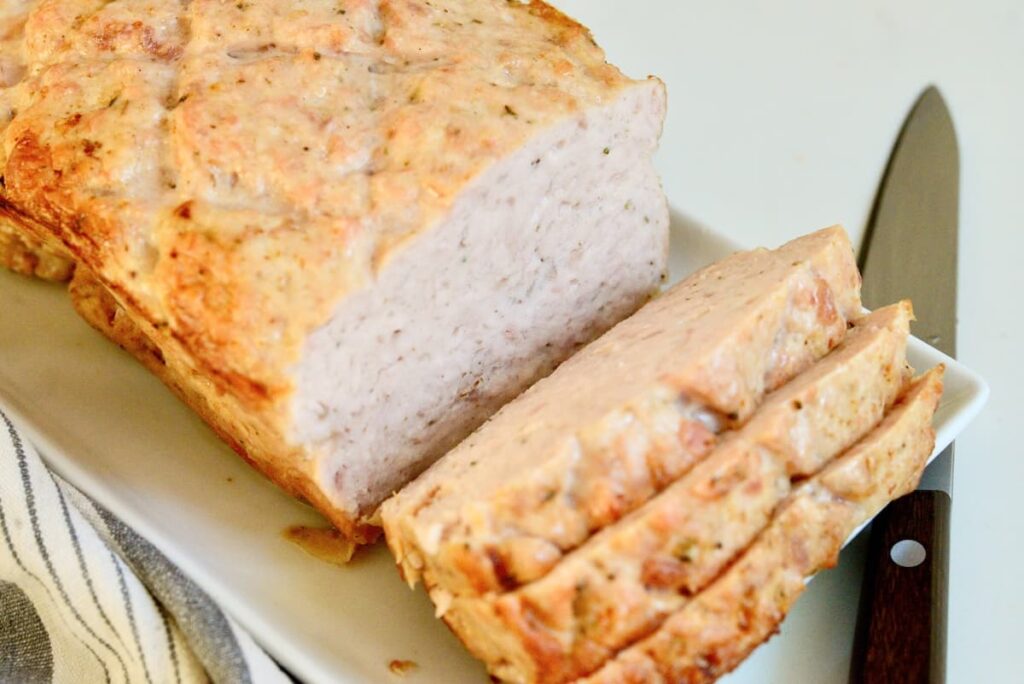
Growing up in Stuttgart, Leberkäse often showed up on our family table. Even decades later, I still get those familiar cravings for the comforting dishes of my childhood. And now, I couldn’t be more excited to share this recipe with you – so you can enjoy a taste of Germany, too!
👉 Note: I have edited this recipe to reflect that German Pökelsalz is NOT the same as US curing salt and updated the amounts accordingly!
This post contains affiliate links, which means I make a small commission when you buy something, but at no extra cost to you. You can read my full disclosure for more details.
What is Leberkäse?
“Leberkäse,” often called “Fleischkäse,” literally translates to “liver cheese” or “meat cheese.”
Despite the name, it rarely contains liver – and definitely no cheese! There are a few theories about how it got its curious name, but what really matters is the taste. Leberkäse is a type of baked meatloaf made from finely ground pork (and sometimes beef), perfectly seasoned and baked with a smooth texture inside.
Why you’ll love this recipe
Ingredients
Here’s what you need:
- Lean pork: I use pork chops.
- Pork belly: Adds moisture and flavor.
- Crushed ice: Helps keep the mixture cool and gives it the right texture.
- Cure #1 and salt: Cure #1, also called Prague Powder #1 or pink curing salt, helps give Leberkäse its traditional pink color and cured flavor. Since U.S. Cure #1 is much stronger than German Pökelsalz, I use only a small amount and add regular salt separately.
- White pepper, nutmeg, ginger, marjoram: Use very fresh spices for the best flavor – you can grind them in a spice grinder for even more aroma.

Simple substitutions
- Lean pork: You can easily replace some of it with beef.
- Crushed ice: Just blend ice cubes in a high-speed blender, or use very cold water instead.
- Cure #1: If you prefer not to use curing salt, replace both the Cure #1 and the sea salt with 20 g regular salt. Your Leberkäse will taste good, but it will look more grayish-brown rather than pink. You can add a small pinch of beet powder for color, but it will not give the same traditional cured flavor.
- Spices: The listed spice mix gives the most authentic German flavor, but feel free to adjust or create your own blend.
- Onion: Optional – a small diced onion adds a subtle sweetness.
How to make German Leberkäse


- Cut meat into dice and freeze briefly.
- Put meat through the meat grinder.


- Add all the ingredients to a stand mixer and mix into a fine, homogenous mixture.
- Generously grease a loaf pan.


- Transfer the meat mixture to a loaf pan.
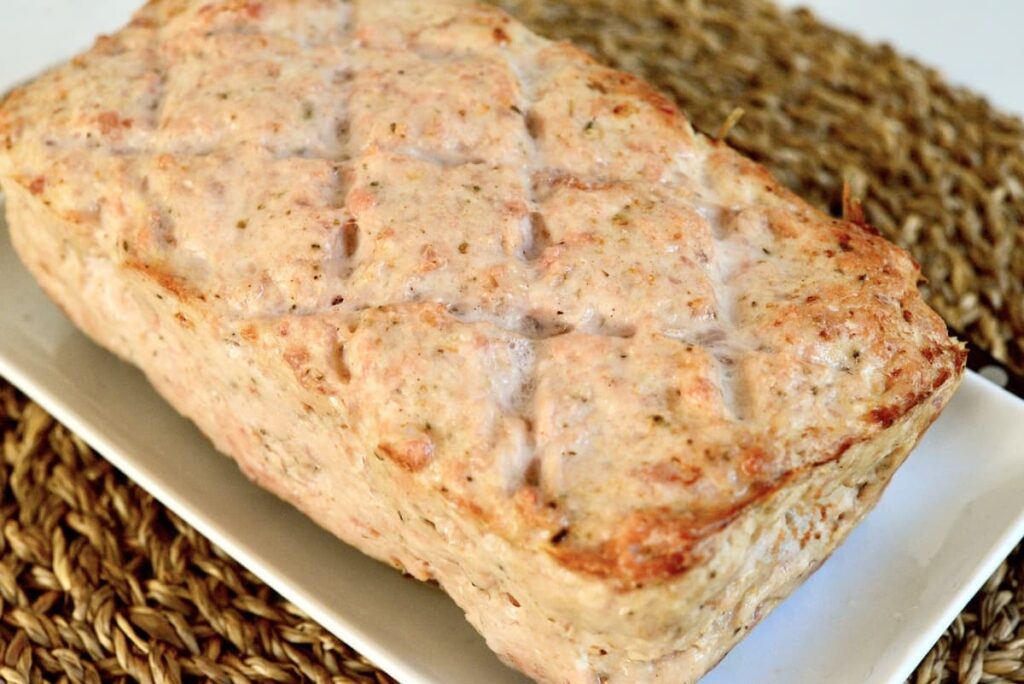
- (Optional) Score the top. Bake for 90 minutes at 320°F.

Helpful recipe tips
- Be sure that the edges of the meat are slightly frozen before putting them through the meat grinder.
- If you don’t have a meat grinder, you can ask your butcher to do this for you.
- For the smoothest results, you can put your meat through the meat grinder twice.
- A food processor works, too, if you don’t have a grinder.
Serving suggestions
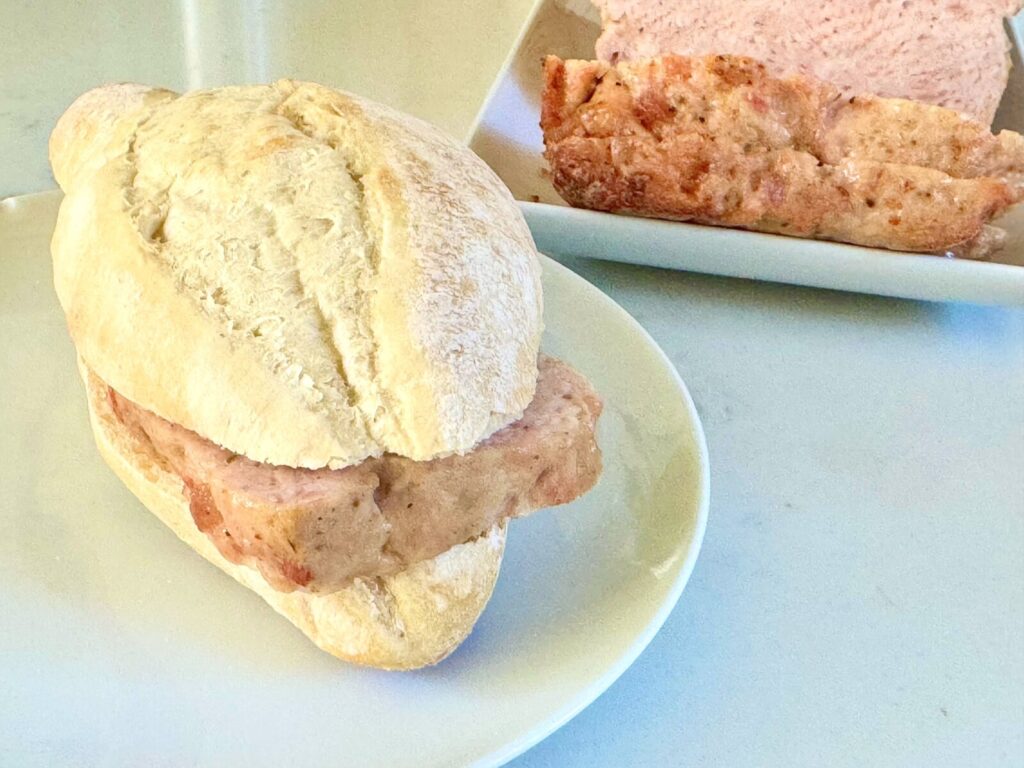
The most traditional way is to simply cut a crusty roll in half, add a slice of Leberkäse, maybe a bit or mustard, and enjoy it as a hearty snack or small meal.
Many people love to fry a slice of Fleischkäse in some oil on both sides, top it with an egg sunny side up, and serve it with creamed spinach and fried potatoes.
Storing and freezing instructions
Keep baked Leberkäse in the refrigerator for up to 3 days.
For longer storage, freeze it. You can wrap the whole loaf tightly in plastic, but I recommend slicing it first. Place a bit of parchment or plastic between slices so you can thaw just what you need.

German Leberkäse
Ingredients
- 600 g lean pork
- 400 g pork belly
- 100 g crushed ice or ice water
- 1 TBSP lard for the loaf pan
- 2.5 g curing salt Cure #1 or Prague Powder #1
- 17.5 g salt
- 1 tsp white pepper
- ¾ tsp marjoram
- ¾ tsp nutmeg
- ¼ tsp ginger
- ¼ tsp thyme
Instructions
- Either use ground spices or freshly grind in spice grinder.
- Cut the meat into 1" cubes, arrange them on a tray, and freeze for 15 mins.
- Remove the meat from the freezer and put it through the smallest plate of the meat grinder.
- Preheat the oven to 320˚F (160˚C).
- Add the ground meat and spices to the bowl of a stand mixer and mix it well. Gradually, add the crushed ice or ice water. Continue mixing until the mixture is soft and homogenous.
- Generously grease a 9"x5" loaf pan.
- Add small portions of the meat mixture to the loaf pan and press each batch down to prevent big holes.
- Optional: score the top in a diamond pattern.
- Bake the Leberkaese for 90 mins or until golden brown. The internal temperature should be 172˚F (78˚C).
Notes
- you can use beef instead of the lean pork
- for a very smooth texture, you can put the meat through the meat grinder twice – or have your butcher do that for you
- the curing salt ensures a fresh, pink color but you can also use regular salt (and a pinch of beet powder for color)
Nutrition
Important: This recipe uses U.S. Cure #1, also called Prague Powder #1 or pink curing salt, which contains 6.25% sodium nitrite. Do not use 20 g of U.S. curing salt. If you are using German Nitritpökelsalz/Pökelsalz instead, use 20 g total and omit the additional sea salt. Do not use Cure #2, Tender Quick, or Himalayan pink salt for this recipe.

FAQs about Leberkäse
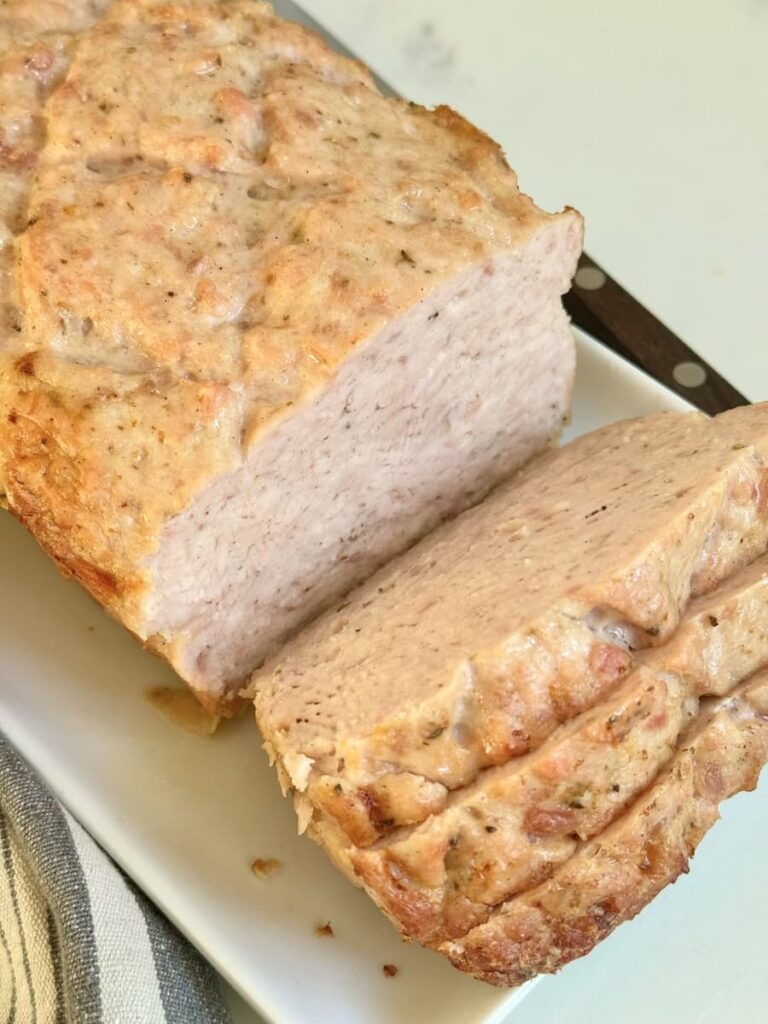
Absolutely delicious! I’d never heard of leberkase before seeing it mentioned on YouTube and then finding this recipe. And while I have no point of reference to the “real thing” the results were fantastic. It’s honestly very simple to make (provided you have the equipment) and the results are really tasty.
We’re having leftovers froze after making our first batch and I can’t wait! Thank you, Anja!
That makes me so happy to hear! Enjoy your Leberkäs!
Hi I would like to make this but I don’t want to use curing salt. How much salt would I use? Also can I substitute pork belly for pork fat? Does the meat ratio change? and last question, on your recipe you have the curing salt as 20g, isn’t that high or do you mean 20g of german pickling salt?
Yes, you are exactly right—that is 20g of German Pökelsalz! If omitting it, simply substitute 20g of regular sea salt or kosher salt (you can add some beet powder for color). You can also absolutely use pork belly in place of pork fat without changing the meat ratios. Happy cooking!
Liebe Anja! Habe ihn heute zum Abendbrot gemacht. So lecker (und einfach)! Geht das auch vielleicht mit Knoblauch- or Zwiebel-pulver? Ja, wenn ich nur jetzt echte Brötchen backen könnte… Danke fürs Rezept! LG aus Cleveland Ohio.
Das freut mich riesig! Ganz bestimmt kann man den auch mit Knoblauch- oder Zwiebelpulver machen!
This was so yummy and perfect to go on cheese and crackers! It reminds me a bit of a summer sausage flavor, but without making my stomach feel icky. It tastes real good on a Reuben sandwich. I am definitely going to keep this recipe, as I try to avoid deli meats because of all the additives etc. this makes a lovely meat for sandwich purposes.
I did a healthy bacon instead of pork belly and ground beef and just a bit less salt than what was called for(since the bacon was salted)
That sounds great and I am glad you made the recipe and liked it as much as we did! Thank you so much for sharing your “edits” ~ Anja
Have u ever sliced this thinly, once cooked and used it like cold cuts/deli meats? It almost looks like bologna.
If I use hamburger for the lean pork, is there a sub for the pork belly? I know beef belly (beef plate) is far leaner than pork belly.
Thanks!
I haven’t but I am sure it’s delicious! You can substitute beef for lean pork but I recommend keeping the pork belly ~ Anja
Very authentic.
So glad to hear ~ Anja