Easy Overnight Sourdough Baguette
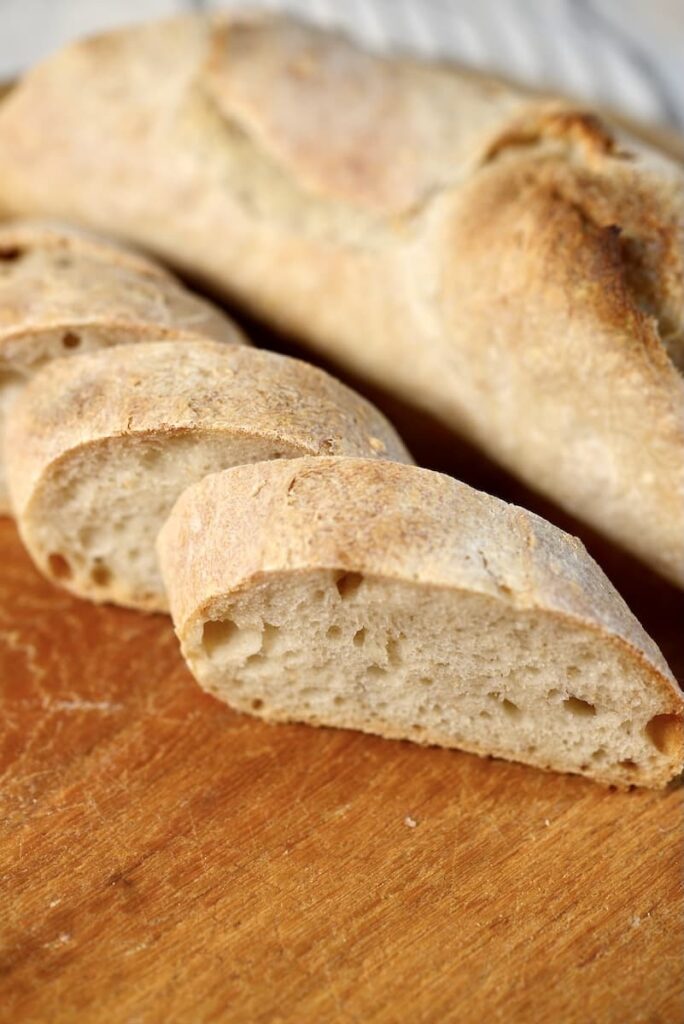
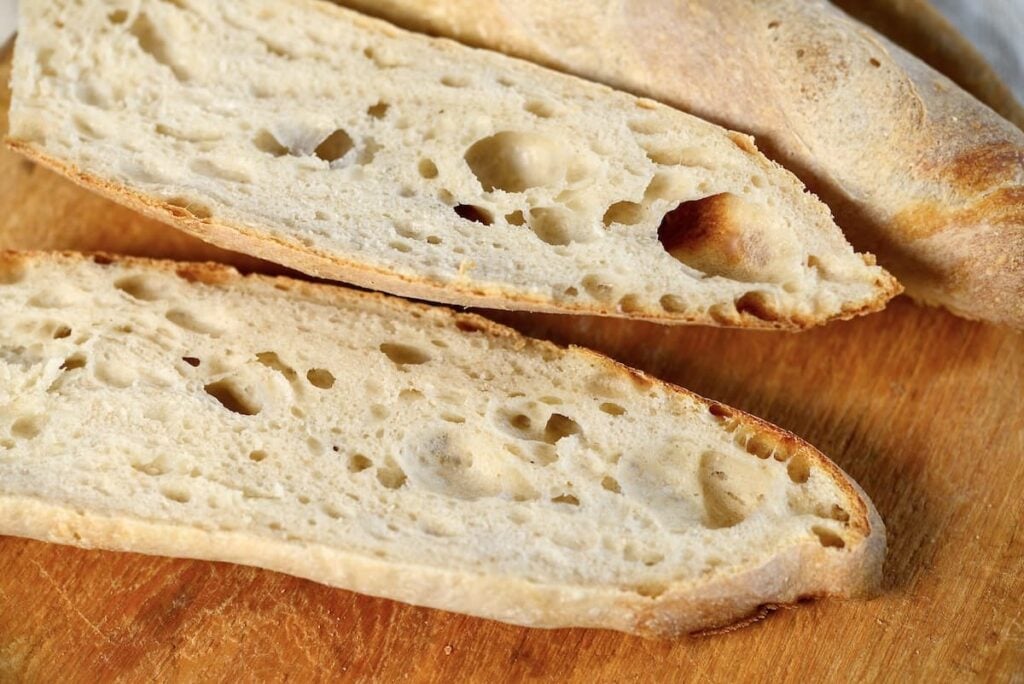
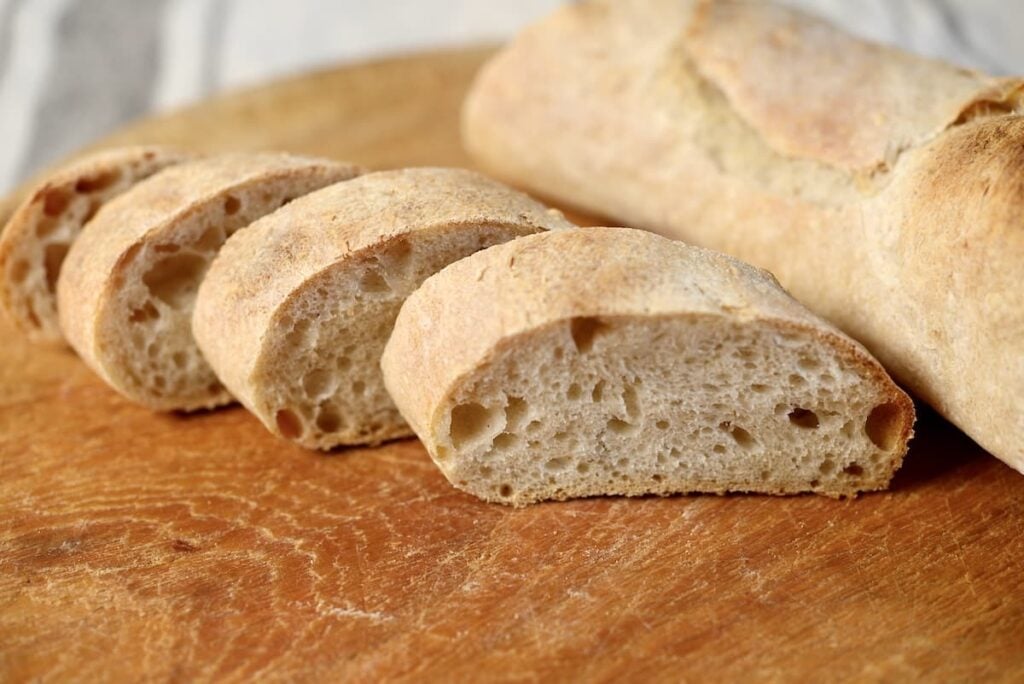
I have spent quite some time perfecting this sourdough baguette recipe, and I am so excited to finally share it with you. My very first batch came out too dense and didn’t rise enough in the oven. Today my baguettes come out with a crisp, crackly crust and a light, airy inside.
Baking my own bread is one of the German habits I have kept even after having lived in America for over 30 years.
These easy overnight sourdough baguettes are naturally leavened with sourdough starter, with no commercial yeast. Most of the work happens while the dough rests in the fridge overnight, which is also where it develops the best flavor.
Below I’ll walk you through everything: the pre-ferment, the stretch and folds, shaping, and how I create steam in a regular home oven. And remember, this is homemade. Mine never come out exactly the same size, and that’s perfectly okay.
This post contains affiliate links, which means I make a small commission at no extra cost to you. You can read my full disclosure.
What makes this sourdough baguette recipe special
Ingredients and Substitutions
This is an overview of what goes into the baguettes. You’ll find the exact amounts in the recipe card at the bottom of this post.
- Active sourdough starter: bubbly and at its peak. This matters more than anything else (see my tips below). You can also learn how to get yours more active.
- Whole grain flour for the pre-ferment. I find it really gets my starter going. I usually mill my own wheat berries for this.
- Flour for the main dough. I use regular organic AP flour.
- Water
- Olive oil: just a little. I always add it because it helps the dough.
- Salt: quite a bit. A baguette should be ever so slightly on the salty side.
Substitutions: You could use some whole grain rye flour; just note that your sourdough baguette will have a bit more of a rustic flavor.
🔧 Helpful Tools
These are the tools I use for my sourdough baguettes. Some of the links below are affiliate links.
What Is a Pre-Ferment (Levain)?
Instead of mixing my starter straight into the dough, I start in the morning with a pre-ferment, sometimes called a levain. It’s a little of my sourdough starter mixed with whole grain flour and water into a very wet starter. It sits in a warm spot for about 4 hours (in the cooler months, I use my Sourhouse Goldie) until it is very puffy, airy, and visibly risen. That active pre-ferment then becomes the base of the dough.
Why Is Sourdough Baguette Dough So Wet?
This is a high hydration dough, and that’s on purpose. Right after mixing, it looks a lot wetter and shaggier than you may be used to. Don’t worry about it. The stretch and folds will transform it.
If you’ve never worked with a dough like this, it may look like it’s never going to come together. Trust the process. Every round of stretch and folds strengthens the gluten structure, and that is what gives a baguette its airiness and lightness. Without it, you’d end up with something dense, more like a whole grain loaf.
⭐️ Anja’s Tips For Success
- Start with a very active starter. If yours is sluggish, do an extra round (or two) of discarding and feeding until it’s at its peak before you mix the pre-ferment. You can also feed your sourdough starter rye flour to accelerate it even more.
- Use wet hands, not flour. Extra flour lowers the hydration and makes the dough stiffer. Wet hands keep the dough from sticking to you.
- Move fast when shaping. The dough is still sticky, so use only as much flour on the counter as you need to keep it from tearing.
- Chill the shaped baguettes for an hour. This helps form a crust and gives them a better rise in the oven.
- Preheat really well. A hot oven and a hot stone matter. If you lose heat while loading and scoring, add a few extra minutes at the end.
How to know the dough is ready: by the fourth stretch-and-fold, it holds together when you lift it. It may still cling to the bowl a little, but it wants to stick to itself more than anything else and no longer sticks to your fingers. That’s perfect.
⏰ Sample Schedule For Making Sourdough Bread
❶ First Day
8:00 am: Mix pre-ferment
12 pm: Mix main dough
4 pm: Perform 4 stretch-and-folds, each 30 minutes apart
6 pm: Transfer the dough to the refrigerator
❷ Second Day
8 am: Shape dough into 3 dough balls
8:10 am: Shape the baguettes
8:40 am: Preheat the oven
9:10 am: Bake the baguettes
10 am: Enjoy your fresh sourdough bread!
How To Make Sourdough Baguettes
⭐️ This is a summary of the steps involved. For the complete instructions, please scroll down to the recipe card at the bottom of the post.
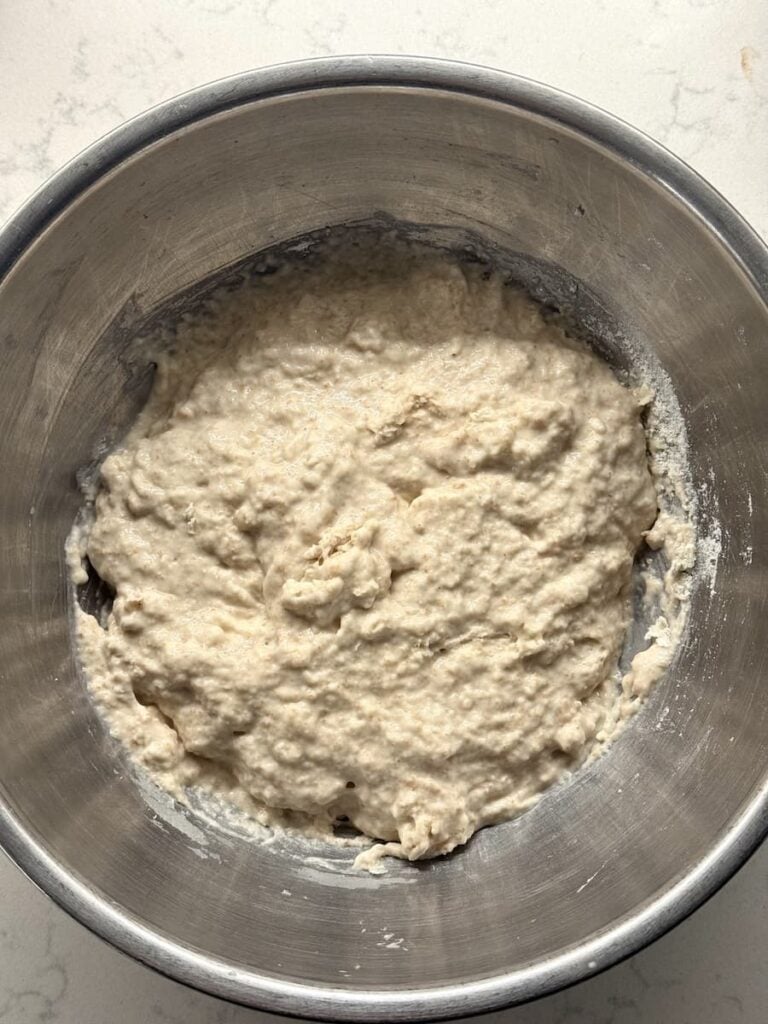
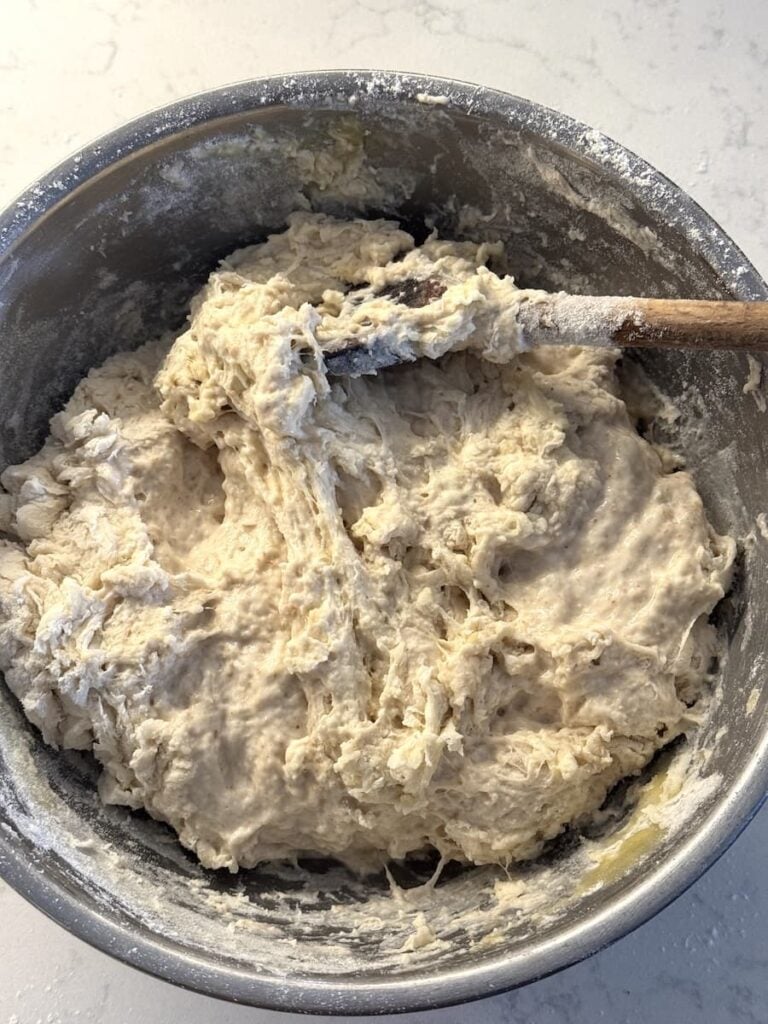
- Mix the pre-ferment. In the morning, mix your starter with whole grain flour and water. Let it sit in a warm spot for about 4 hours, until it’s very puffy, airy and visibly risen.
- Mix the dough. Stir the water, olive oil and salt into the pre-ferment first, then add the flour and mix into a very shaggy dough. Cover and let it rest at room temperature for 4 to 6 hours.
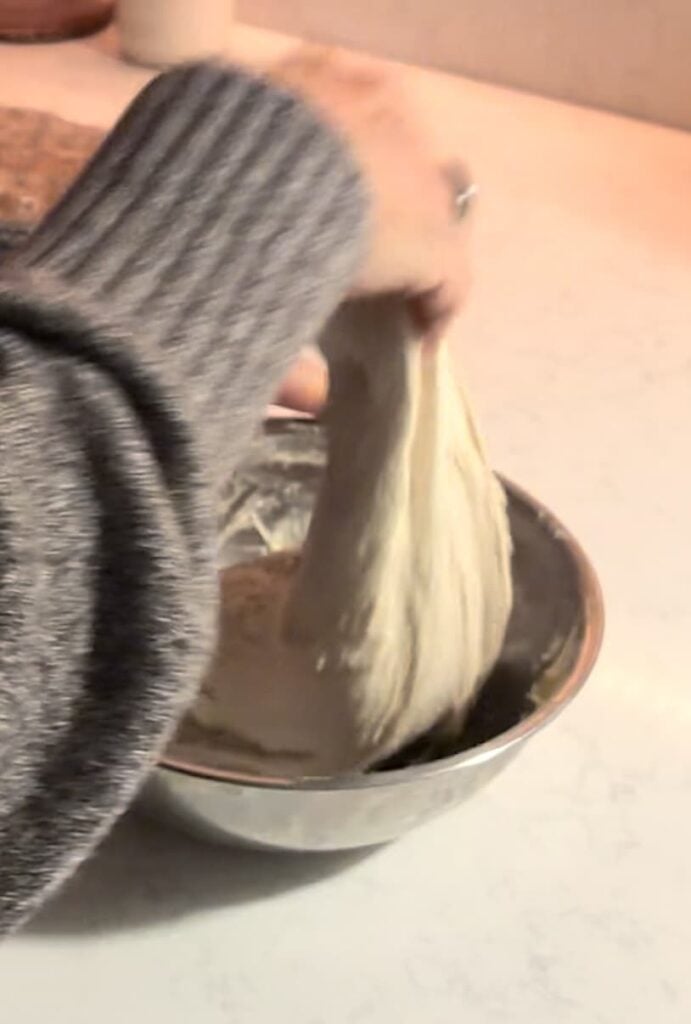
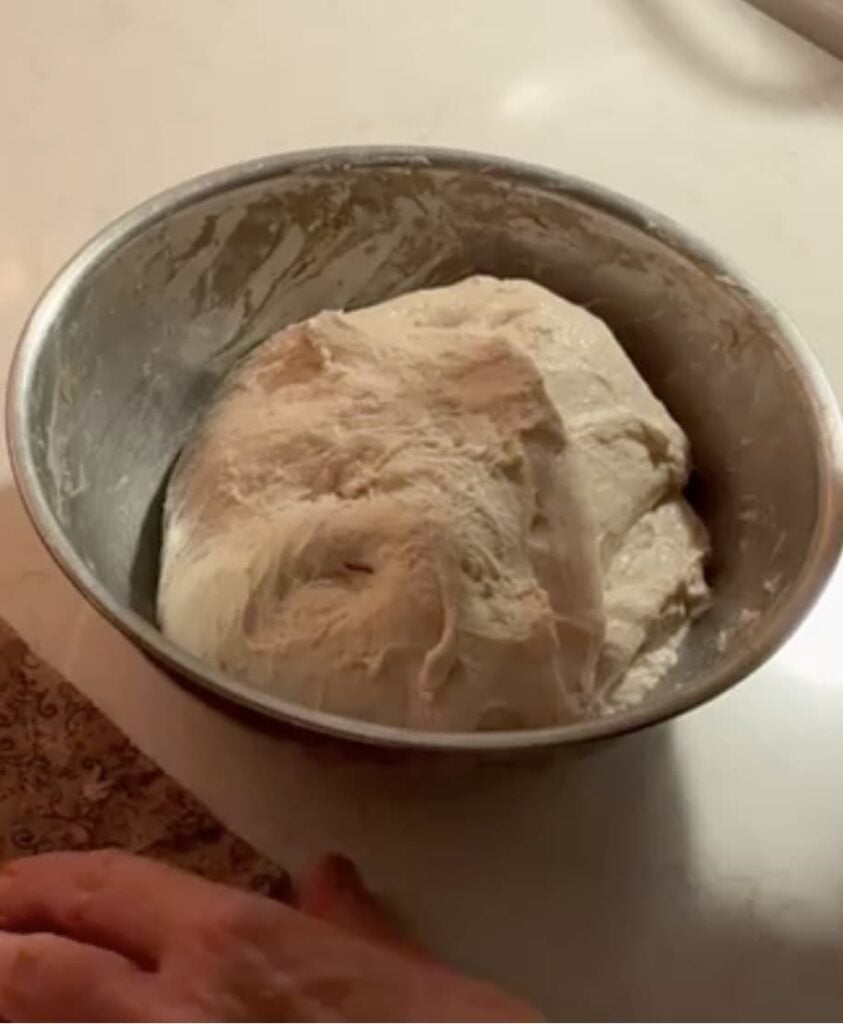
- Stretch and fold. With wet hands, stretch the dough and fold it over itself. Do 4 rounds, 30 minutes apart, until the dough holds together and no longer sticks to your fingers.
- Cold ferment overnight. Cover the bowl and refrigerate the dough overnight, at least 8 hours, so it can develop the best flavor.
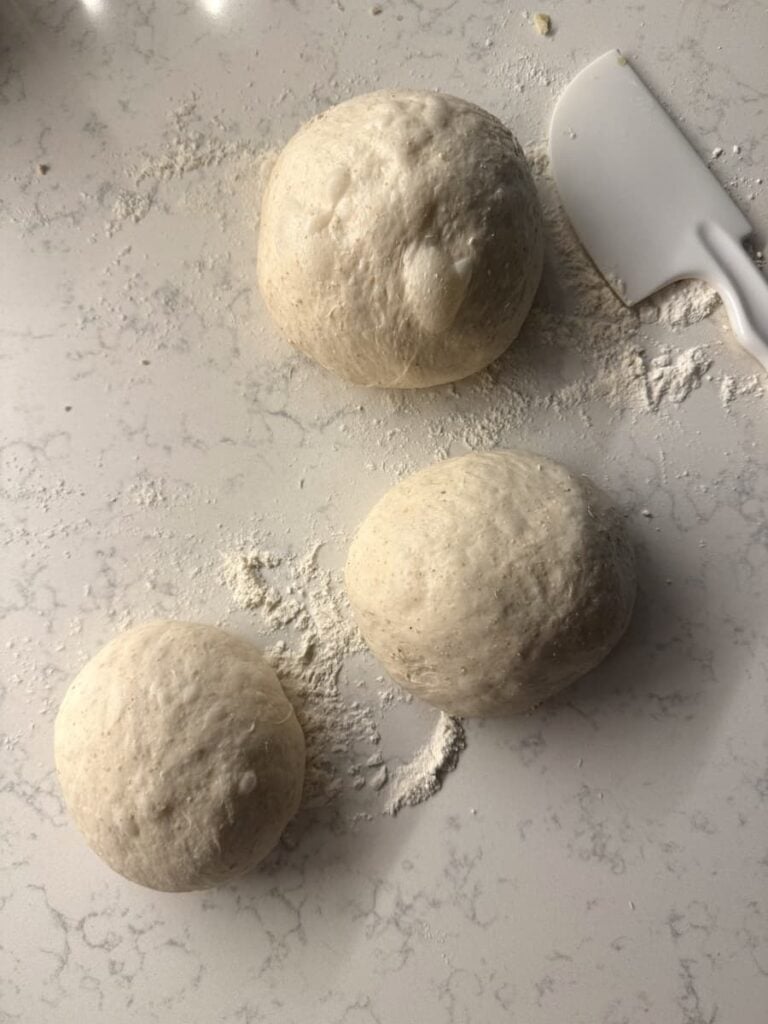
- Divide and pre-shape. Turn the dough out onto a lightly floured counter, divide it into 3 roughly equal pieces and shape each into a round. Let them rest for about 10 minutes.
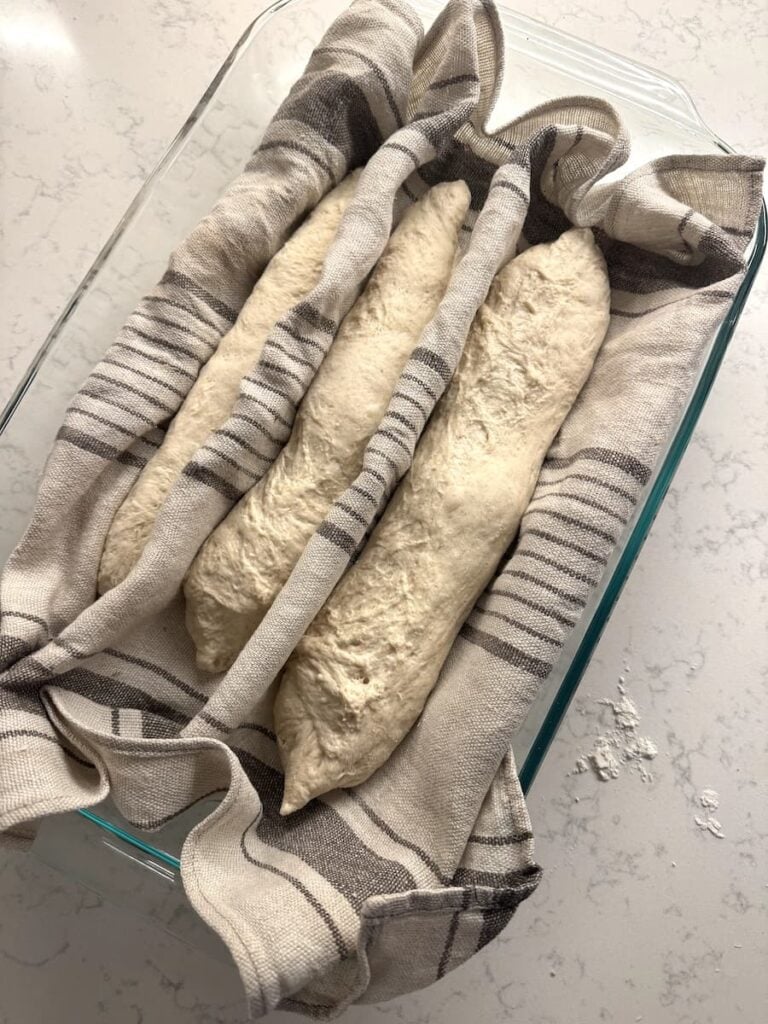
- Shape and chill. Roll each piece over and into itself to build surface tension, then roll it out into a long log, about 16 inches, with slightly pointy tips. Place in a floured linen towel and refrigerate for 1 hour.
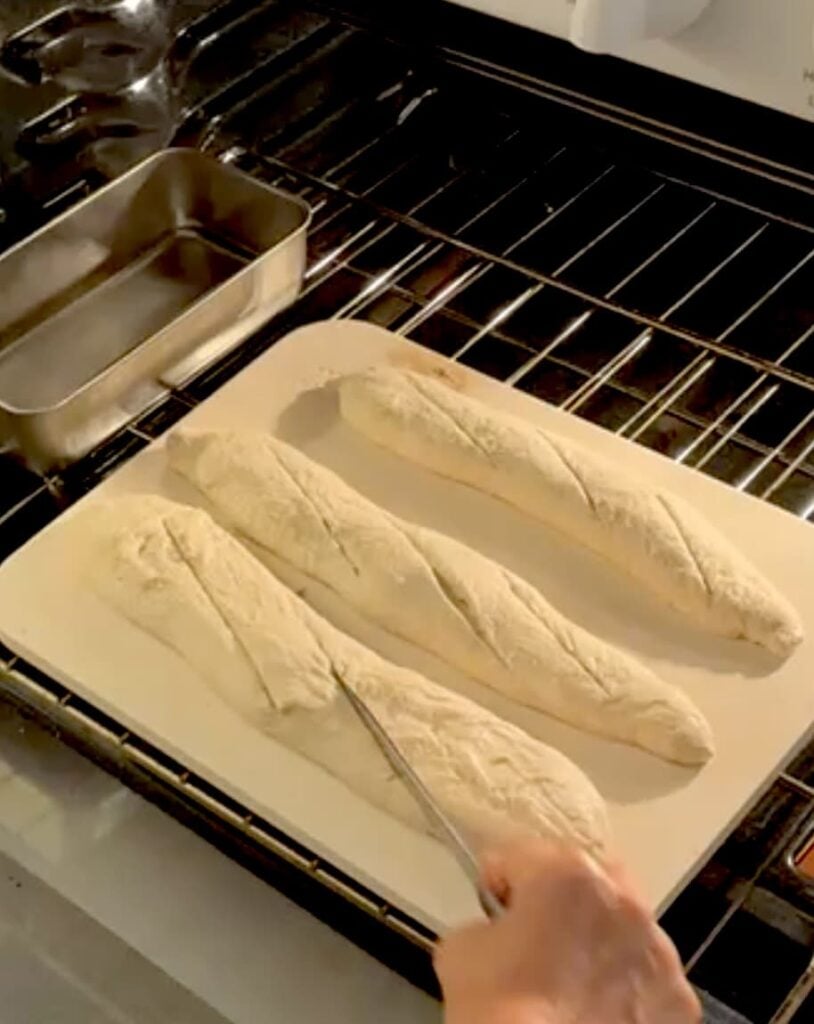

- Preheat and score. Preheat the oven to 480°F with a pizza stone inside and a loaf pan of water for steam. Transfer the baguettes to the hot stone and score the tops with a lame or a sharp knife.
- Bake and cool. Bake for 10 minutes with steam, then remove the water and bake another 10 to 15 minutes until deep golden. Cool on a wire rack so the crust stays crisp.
Why Are My Sourdough Baguettes Dense or Flat?
My very first batch came out too dense and didn’t rise enough in the oven, so I know how disappointing that is. These are the things that make the biggest difference:
- The starter wasn’t active enough. Feed and discard until it’s really bubbly and at its peak, and make sure the pre-ferment is puffy and visibly risen before you mix the dough.
- The gluten wasn’t developed. Don’t skip the stretch and folds. They are what give the baguettes their airy, open inside.
- Too much flour. Adding flour to a sticky dough lowers the hydration and makes it stiff. Wet your hands instead.
- The oven lost too much heat. Opening the door to load and score lets heat escape. You can take the stone out, load the baguettes on it, and put it back so the oven stays closed longer, or simply add a few minutes at the end.
Can You Make Sourdough Baguettes Ahead of Time?
Yes. This recipe is make-ahead by design. The dough rests in the fridge overnight, at least 8 hours, so you can mix it one day and shape and bake the next morning.
If you like your baguettes more on the sour side, you can leave the dough in the refrigerator for up to 3 days.
How Long Do Sourdough Baguettes Last?
Sourdough baguettes are best the day they are baked, when the crust is at its crispiest. I love to keep it either in a linen bread bag or in beeswax wrap. You can always spritz it with some water and crisp it up in a 400˚F (200˚C) hot oven.
Day-old baguette is still great sliced and toasted, or used up in your favorite stale bread recipes.
Sourdough Baguette FAQ
No. I place my shaped baguettes in a dish lined with a floured linen kitchen towel. A baker’s couche is made from a stiffer linen and works well too, but my kitchen towel works well enough.
Yes. A very sharp knife works. I couldn’t find my scorer when I filmed my video, so that’s exactly what I used.
Shape them thinner if you love a crusty baguette, or a bit thicker if you like more softness on the inside. That’s the beauty of making your own.
Weigh the dough pieces when you divide the dough. I usually just eyeball it, so some of my baguettes are bigger than others, and that’s okay.

Easy Overnight Sourdough Baguette
Ingredients
For the preferment:
- 50 g sourdough starter very active
- 200 g whole grain flour
- 200 g water
For the main dough:
- 175 g water
- 1 TBSP olive oil
- 1 tsp salt
- 300 g AP flour
Instructions
- For the preferment, mix the preferment ingredients. Cover the bowl and let it rest at room temperature for 4 hours.
- Add the remaining ingredients and form into a shaggy dough. Let it rest for 4 hours at room temperature. Perform 4 stretch-and-folds, each 30 minutes apart.
- Cover the dough and transfer it to the refrigerator over night.
- Carefully transfer the dough onto a lightly floured surface. Divide the dough into 3 equal pieces.
- Shape the dough pieces into round balls and let them relax for 10 minutes.
- Turn the dough balls with the seams up. While creating tension and folding the dough onto itself, shape each dough ball into long rolls.
- Carefully transfer the dough rolls onto a lightly floured baker's couche or linen towel. Place them in the refrigerator for one hour.
- Preheat your oven (and pizza stone if you have it) to 480˚F (250˚C). Place an ovenproof dish with water inside your oven.
- Carefully place the baguettes onto the pizza stone or baking tray. Score them 3 times diagonally. Lower the oven temperature to 445˚F (230˚C).
- Bake the baguettes for 10 minutes. Remove the water dish. Bake the baguettes another 15 minutes or until golden-brown.
- Let the baguettes cool down on a wire rack.
Notes
- be sure to have a very active sourdough starter; if not, I recommend you give it another feeding or two before making this recipe
- the main dough will be very wet and shaggy; resist the urge to add more flour, instead use wet hands to perform the stretch-and-folds
Nutrition
Other Sourdough Bread Recipes You Might Like
If you love baking bread with your sourdough starter as much as I do, here are a few more recipes to try next. For a German bakery classic, my crusty sourdough rolls (Sauerteigbrötchen) are perfect for Sunday breakfast, and my German Bauernbrot is a simple sourdough mixed grain bread. For everyday sandwiches, try my easy seeded sourdough sandwich bread. If you want something a little special, my sourdough garlic rosemary pull-apart bread and easy sourdough brioche are always a hit. And if a baguette ever goes stale, these stale bread recipes will help you use up every last piece.
Let me know if you have any questions or comments!
Pin For Later: